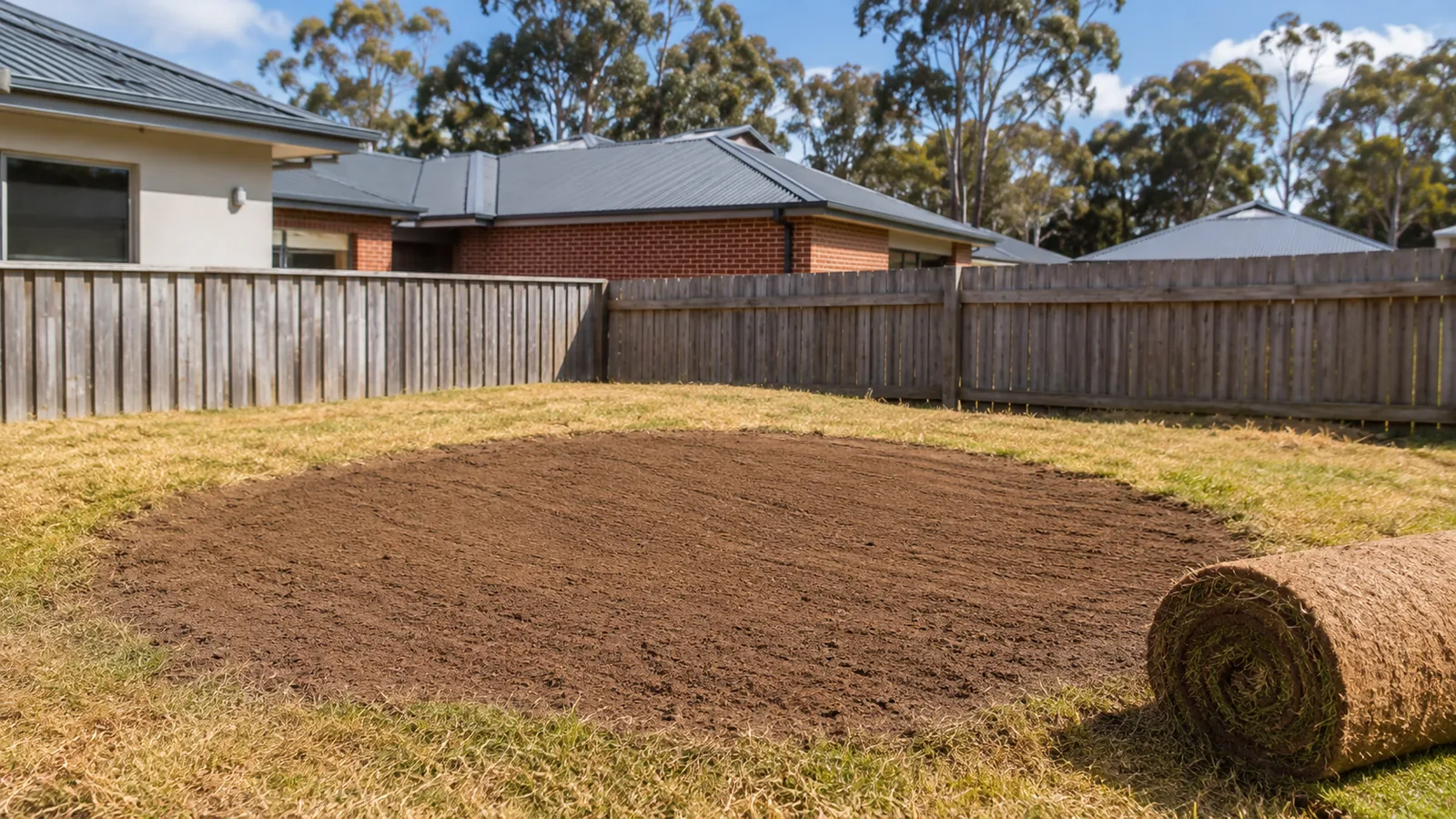
Work out what you want the replacement tree to do
Start with the purpose: afternoon shade, privacy from an upstairs window, fruit, seasonal flowers or a place for birds. Each purpose changes the best location and the sort of tree worth considering. A tree that shades the house may not belong in the old planting hole, and a screening tree may work better as part of a wider planting design than as a direct replacement.
Make a short description of the garden as it is now. Include buildings, fences, washing lines, paths and the areas people use. In a Pakenham backyard that has changed since the original tree was planted, copying its position can repeat a problem that no longer suits the household. Decide what the new tree needs to achieve before committing to a particular size, species or stump-removal method.
Compare the old position with an offset position
Draw the old stump centre and at least one alternative location if space allows. An offset location may avoid the densest remaining wood and allow simpler preparation. It still needs checking for services, neighbouring roots and adequate room. Moving the planting hole a little is not a universal cure if the surrounding root plate occupies the whole available bed.
Look at how each location will function when the tree grows. Imagine the canopy rather than just the nursery pot. Will it shade a vegetable bed, crowd a gutter, interfere with a gate or leave a path permanently narrow? Take photographs from the house as well as from the garden. These show how the planting affects everyday use, which is often missing from a close-up view of the stump.
Use removable surface markers to compare the positions from inside the house. Check the view from the main living room and the space needed to move around outdoor furniture. Leave the markers in place through ordinary garden use before settling on the layout. This small exercise can reveal that the preferred position on a sketch blocks a regular walking route or places future shade over the wrong part of the yard.
Find out why the previous tree was removed
A tree taken out because a garden layout changed presents a different question from one that died without a clear cause. Ask for any available arborist notes, old photographs or recollection of symptoms. Leaves declining, soil remaining wet and roots damaged during earlier work are useful observations to share with a horticultural adviser. They are not enough to diagnose a disease yourself.
Do not assume stump grinding has corrected the original growing problem. If the position was unsuitable, planting the same type of tree into the same conditions may repeat the difficulty. Likewise, switching species at random can miss a drainage or soil issue that affects many plants. Investigate the history before buying replacement stock, particularly when the old tree deteriorated soon after landscaping or drainage changes.
Define a planting area rather than a grinding depth
Tell the stump contractor where the proposed planting will go and ask what wood is likely to remain in that area. The work needs to consider the shape of the root plate, not only the depth beneath the centre. A narrow cleared pocket may accept a nursery root ball while leaving little practical space around it for proper preparation.
Ask the person planting the tree to specify what they need to inspect before accepting the location. Grinding, excavation and planting are different tasks, and the handover should identify who assesses the resulting ground. If the replacement position is still undecided, avoid paying for an arbitrary deeper grind as insurance. Resolve the design first so the removal scope serves the actual planting plan.
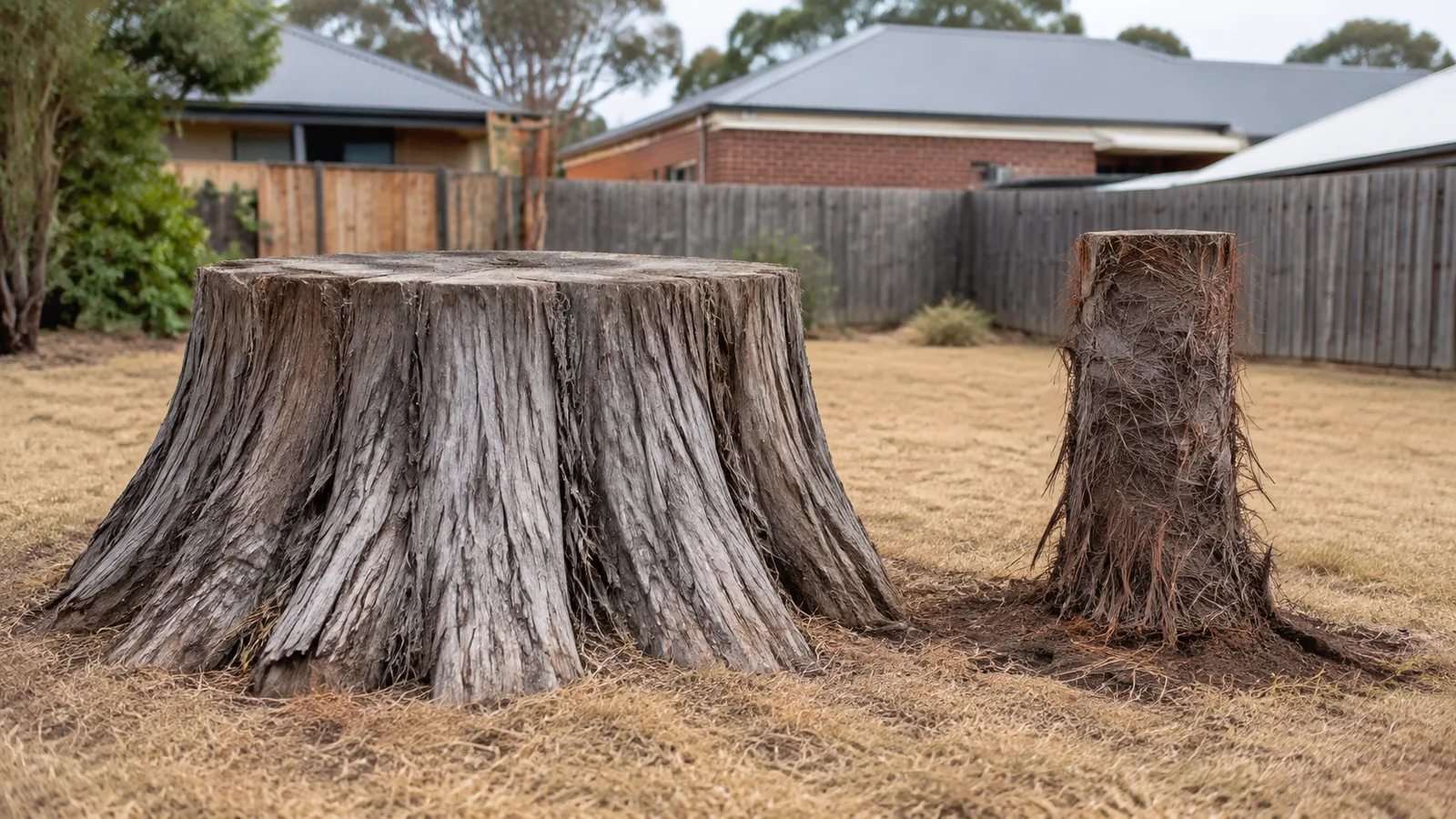
Separate planting soil from loose woody material
A stump patch can look like fine soil from a distance while containing a high proportion of fresh chips and sawdust. The RHS advises against using sawdust to fill a stump hole because decomposition can affect nutrients and lower the ground level. That principle is a reason to assess the material left in the planting area rather than simply cover it.
Ask what will be removed and what suitable soil will replace it. Keep the answer tied to the planting area; there may be other places where some woody material can be used appropriately on the surface. Avoid mixing a large heap through the future root zone merely to hide it. Record soil preparation separately from stump removal so the quote and handover make clear which task has been completed.
Check water movement before the tree arrives
Watch the proposed spot after rain and compare it with nearby ground. Does water collect only in the recently disturbed patch, flow from a downpipe, or remain across a wider part of the garden? These observations help the planter decide whether the issue is local preparation or a broader drainage problem. Describe what you see rather than labelling the soil from the suburb alone.
Do not improve a planting hole by adding random layers of rubble or gravel without a considered drainage design. The result may not address where the water is coming from or where it can leave. If water conditions are unresolved, keep the tree purchase separate from the stump booking. It is easier to change the planting plan before a large pot is waiting on the driveway.
Choose the tree using mature dimensions
At the nursery, ask about mature height, canopy spread, soil preferences and establishment care. Bring the garden measurements and photographs, including the available space above and around the proposed location. Ask about locally suitable alternatives that achieve the same purpose if the first choice is too large. A familiar name or attractive label is not enough to establish suitability.
Consider how you will water and inspect the tree during establishment. A planting position that is awkward to reach often receives inconsistent care. Think about hose access, mowing, pets and whether mulch can be kept in place without spilling onto a path. Choose stock and planting arrangements you can maintain rather than relying on a larger tree to provide instant results with less attention.
Hypothetical example: replacing shade in a small backyard
A household removes an oversized tree near its fence and wants shade beside an outdoor table. The old stump is convenient to point at, but its position would put the replacement canopy back over the neighbour's garden. They mark another possible planting area closer to where shade is wanted, then ask a nursery adviser to compare suitable trees for that space.
The stump work is scoped to remove the obstruction and manage spoil, while the proposed new planting area is checked separately. The household records where water collects after rain and confirms a watering route that does not cross the main walkway. This avoids treating deeper grinding at the old centre as the solution to every part of the project. The replacement tree is selected for its future role in the current garden.
Set planting levels carefully
Once the ground has been accepted for planting, ask the planter to identify the tree's root flare and show how it relates to the finished soil level. Have the planter confirm the correct level for the supplied tree so the bare stem is not buried. Do not assume the top of a nursery container's potting mix is automatically the correct reference if the stem has already been buried in the pot.
Keep future soil settlement in the discussion. A recently filled stump hollow may change after preparation, and the planter needs to account for the actual ground conditions. Avoid covering the stem with extra soil later to make the garden look level. If the tree appears to have sunk or become unstable, seek advice on the cause instead of adding another mound against its trunk.
Avoid the common shortcuts
Buying the tree before deciding its position creates pressure to plant into whatever hole is available. The remedy is simple: choose the location and preparation requirements first. Another shortcut is selecting the same species because the previous one grew quickly. Consider why that tree was removed and whether its mature form remains appropriate for the available space.
A third mistake is judging readiness by a neat surface. Ask what lies underneath and who has accepted the preparation. A fourth is applying fertiliser to compensate for obviously unsuitable planting material without investigating it. Feeding does not remove buried timber or correct a poor position. When a new tree struggles, record the symptoms and watering history and seek a diagnosis rather than changing several things at once.
Make the aftercare plan before planting day
Agree how the tree will be watered, what should prompt extra checking and when any supports or ties will be reviewed. Ask for advice matched to the species, stock size and site. Keep that advice where the person doing the watering can find it. The condition of the root ball and surrounding soil matters more than following an unchanging calendar regardless of the weather.
Take a photograph immediately after planting that shows the stem base and surrounding level. Use later photographs from the same position to notice changes. Check that mulch stays away from the stem, that garden activity has not buried the base and that water reaches the intended area. A simple record is useful if you need help separating planting problems from weather or accidental damage.
Prepare a brief for the stump contractor and planter
Include the old tree's identity if known, why it came out, the intended replacement purpose and the proposed planting locations. Add a wide garden photograph, any observations about water and the position of nearby structures. State whether you expect spoil removal, soil preparation or planting to be included, and ask for each part to be described separately.
For Pakenham and surrounding gardens, the most useful local detail is the actual site: sun, shelter, soil behaviour, access and available space. A postcode does not establish those conditions. Keep the brief practical and leave species-specific recommendations to someone who can assess the plant and location. The aim is to give the replacement tree a suitable place to grow, rather than simply put something green where the stump used to be.