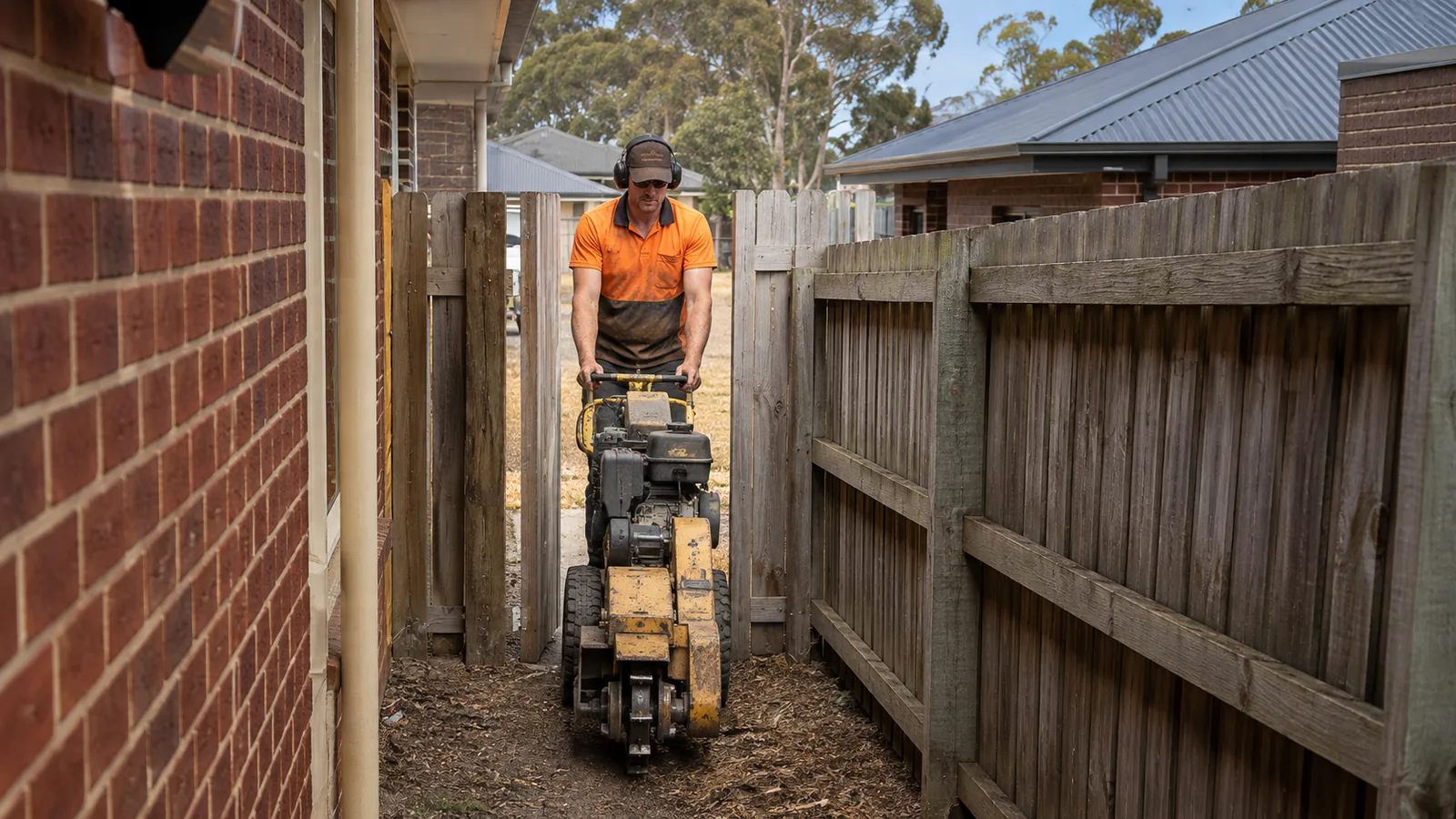
Look at the route and the work area separately
Stand where you can safely see the journey from the unloading point to the stump. A firm driveway can lead to a wet side path, then a lawn that looks sound until the ground falls away near the tree. Record each change in surface. The operator needs to know where the weakest or most uncertain part is, not simply whether the driveway is accessible.
Then look at the space where the machine would work. It may need room to reposition, and its return route can differ from the path shown in your first photograph. Keep garden furniture and stored materials out of the assessment area. Do not move the machine or test the ground with a vehicle yourself to demonstrate that the route is usable.
Include the unloading area in the update even when the garden itself has not changed. A parked skip, building delivery or vehicle on the driveway can force a different approach across softer ground. Tell the contractor before arrival if the planned firm route is no longer available. Moving the job to an unassessed side entrance is a new access decision, not a minor adjustment that can safely be assumed from the original booking.
Describe what the ground is doing
Useful observations are specific: water remains beside the gate, shoes leave deep impressions near the stump, a wheelbarrow recently cut a rut, or a section of lawn has lifted around an old root. These details tell the operator more than calling the garden muddy. Photograph the condition from a firm position and include a fixed landmark so the location is clear.
Avoid treating a suburb name as a soil test. Two Pakenham gardens can have different fill, drainage and levels, even on the same street. A sheltered side passage can remain wet while the open lawn dries. Describe the actual site and mention previous drainage or landscaping work if known. The job should be assessed against what is there now, not a broad assumption about the area.
Understand why a dry surface is not enough
The top of the ground may look dry while softer material remains below. Likewise, a small damp patch may sit over otherwise firm ground. Appearance alone cannot establish how the route will behave under machinery. Let the operator assess support and traction for the equipment they intend to use, especially where the ground has recently been filled or disturbed.
Do not promise that a certain number of dry days will solve the problem. Weather, shade, drainage and the depth of wet material all affect what happens next. If the booking has been deferred, agree which observations would be useful before reassessment. A new set of photographs and a description of changed conditions are better than an automatic rebooking based only on the forecast.
Treat slopes as a separate constraint
Wet conditions on a slope raise questions beyond leaving tracks in the grass. The route's direction, sideways fall, turning points and the machine's working orientation all matter. A slope that a person walks comfortably may still be unsuitable for the equipment in the proposed conditions. Do not convert a casual visual estimate into a claim that the machine can operate there.
Ask the operator to apply the instructions and limits for their actual machine. Manufacturer guidance is model-specific; a figure seen for one stump grinder does not clear another. Show steps, edges, retaining walls and changes in level in the photographs. In a garden on a rise near Pakenham Upper, provide a side view that shows the terrain rather than only a head-on photograph of the stump.
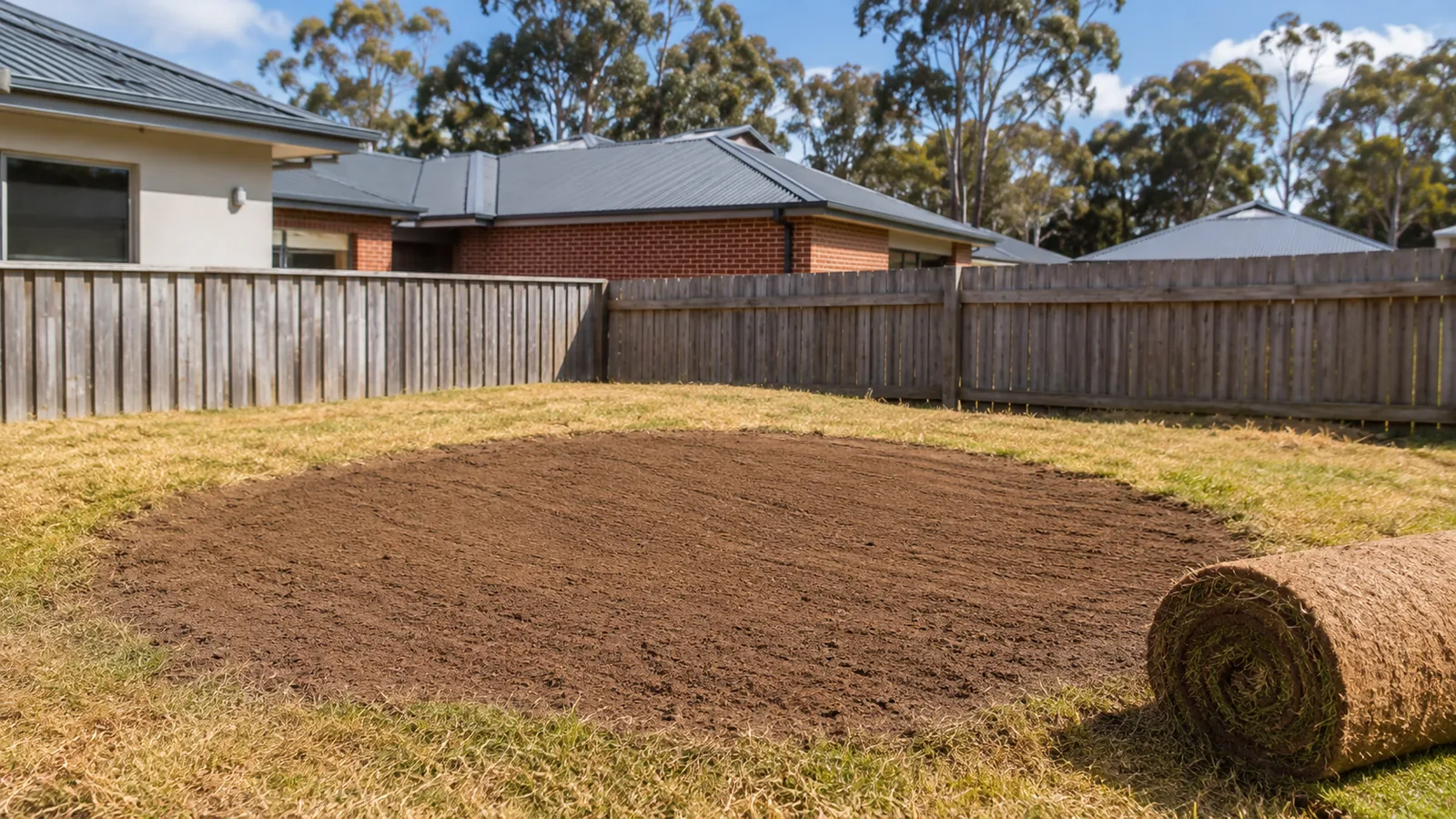
Discuss surface protection without improvising it
Ground protection can be part of a considered plan, but it is not a promise of no damage and does not make every soft route workable. Ask what the contractor proposes, which surfaces it is intended to protect and who supplies it. The solution must suit the equipment, ground and turning movements, not simply cover the most visible section of lawn.
Avoid laying household boards, loose paving slabs or makeshift ramps before the operator arrives. These may shift, conceal hazards or create an unsuitable transition. If you already own purpose-made protection, describe it and let the contractor decide whether it is appropriate. Record any existing cracked paving or damaged edging so the condition of the route is clear before work starts.
Plan where wet spoil will go
The material produced at the stump needs somewhere to go even if the machine can reach it. Agree whether it will stay near the patch, move to a garden area or be taken away. In wet conditions, the route for moving material and the condition of the storage area can affect the plan. Keep access to drains, gates and ordinary household routes clear.
Do not wash grindings into a drain or direct muddy water towards a neighbouring property to tidy the area quickly. Ask the contractor how material will be contained and how the ground will be left if finishing work has to wait. If a temporary pile is agreed, identify its location on a photograph and consider how children, pets and garden users will be kept away from it.
Coordinate work that depends on the stump booking
A fence installer, turf delivery or landscaper may be scheduled immediately after grinding. Tell them if wet ground could change the timing. Ask whether their work can proceed independently or whether the cleared area must first be inspected. Keeping every booking fixed while the first stage remains uncertain can create pressure to work in unsuitable conditions.
Agree a decision time with the stump contractor and a practical contact method. Know who will confirm the visit and who needs to be notified if conditions change. If materials are being delivered, check storage and access arrangements before they arrive. A flexible sequence may allow another part of the garden project to continue while the stump area waits for assessment.
Hypothetical example: rain before a fence job
A homeowner has arranged stump grinding before a boundary fence replacement. Rain leaves the lawn near the stump soft, while the driveway and side path remain firm. They send separate photographs of the route and stump area instead of reporting that access is fine. The operator can then assess the actual working position and discuss whether the planned visit is suitable.
The fencer is told that the stump stage has an unresolved ground issue. Temporary boundary arrangements are kept separate from the final installation date, and materials are stored away from the access route. If the work needs to move, the homeowner can revise the sequence without leaving an open boundary or blocking the grinder's eventual approach. The useful preparation is coordination, not a guess about tomorrow's weather.
Avoid the shortcuts that make reinstatement harder
One mistake is repeatedly moving heavy loads over the same soft patch because the surface will be repaired later. More disturbance can enlarge the repair area and affect access for the next trade. Agree the traffic route and leave uncertain ground alone until it is assessed. A second mistake is spreading loose spoil across the lawn simply to reduce the visible heap.
Another shortcut is covering the disturbed area with topsoil while it is still unclear how it will settle or drain. The next contractor may need to see what remains beneath. Keep grinding, material removal and reinstatement as distinct tasks where appropriate. If the garden is handed over between stages, record the temporary condition and who is responsible for making it suitable for everyday use.
Check what happens if work pauses partway through
Discuss the stopping arrangement before work begins when conditions are changeable. The contractor should be able to explain how equipment, loose material and any disturbed ground will be secured if continuing becomes unsuitable. Make sure the household understands which areas remain out of use. Do not assume a paused job leaves the garden in the same condition as before arrival.
Identify practical needs such as the only route to a rear door, pet access or a shared driveway. These should remain part of the plan even if the job takes more than one visit. If temporary barriers are required, agree who checks and maintains them between visits. Keep the contact details and completion scope available so a later visit starts with a clear understanding of what remains.
Inspect the route as well as the stump patch
After work has stopped and the area is safe to enter, inspect the access route, turning locations and spoil area with the contractor. Compare the condition with your earlier photographs. Note any reinstatement still needed and whether that work belongs to the grinding contractor, landscaper or homeowner. Be specific about locations rather than recording only that the lawn needs repair.
If the surface changes after rain, take another photograph before adding material. A low spot, standing water and loose grindings can look similar from a distance but call for different responses. Share the observation with the person responsible for reinstatement. Keeping a brief record helps resolve whether the issue relates to the prepared stump area, traffic along the route or an existing drainage condition.
Make a weather brief that stays useful
Include the suburb, current ground observations, date of the photographs and the proposed machine route. Mark slopes, soft areas, drainage points and where spoil could be placed. Add any dependent bookings and the household access that must remain available. The tool below turns those observations into a short brief you can save and update.
Before the visit, report meaningful changes such as new standing water, a damaged path or a blocked access route. There is no need to send every forecast update. Focus on the conditions the operator will actually encounter and the decisions still outstanding. The final go-ahead belongs with the person assessing the site and equipment, with the agreed scope and ground protection considered together.