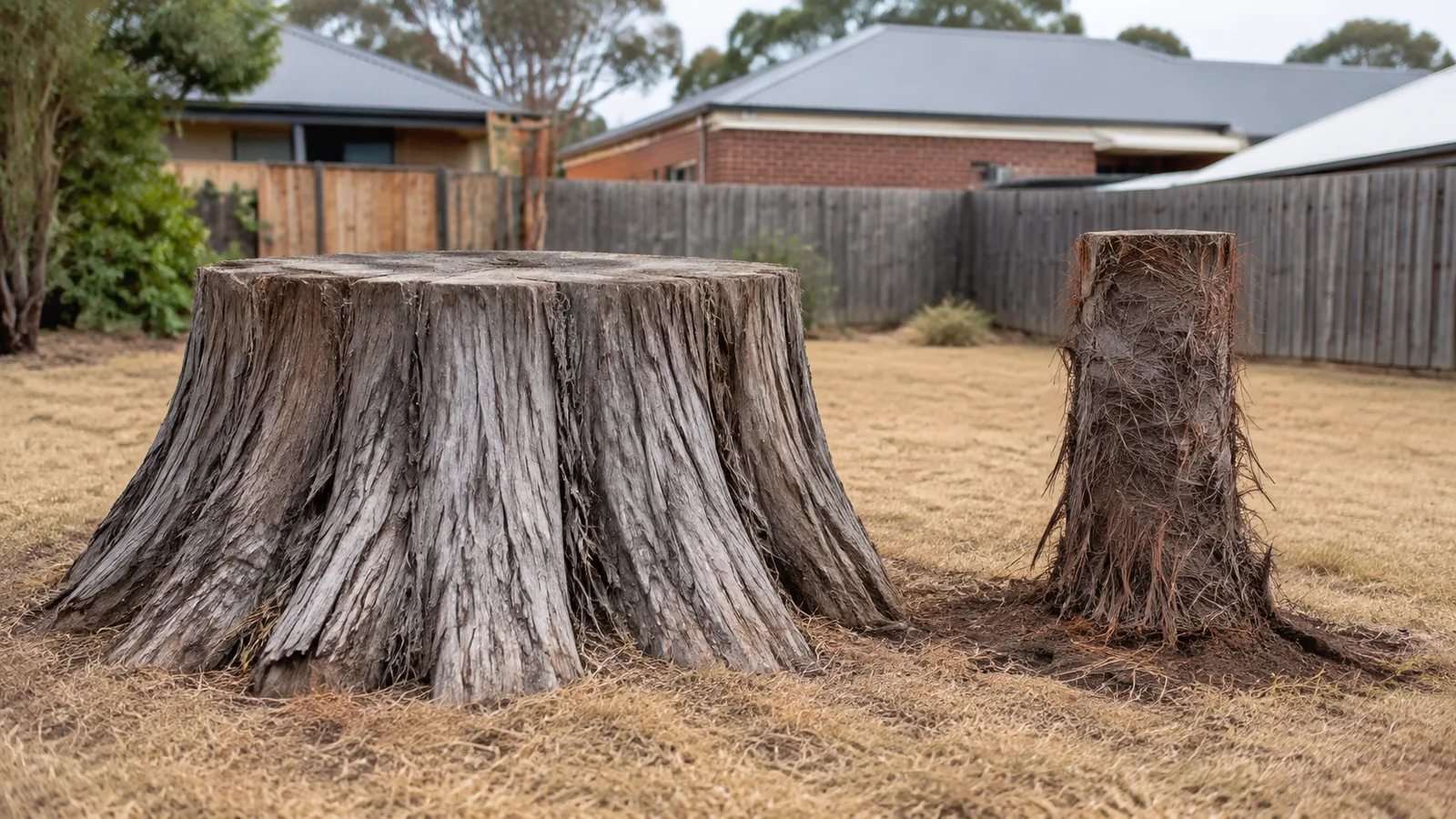
Notice where the growth begins
Before cutting anything, photograph the new growth in relation to the old stump. A shoot at the centre of the grinding patch raises a different question from a line of shoots beside the fence. Include a wide view, then a closer view of the leaves and visible attachment. Keep the photographs dated so later observations can be compared with the same location.
Do not pull apart the soil merely to prove a connection. The visible pattern is enough to start a discussion with the stump contractor or an arborist. Where growth is close to paving, a retaining wall or services, leave investigation to someone who can assess those constraints. Your first task is to record the problem clearly, not to uncover every root across the garden.
Understand the difference between a sucker and a seedling
A sucker grows from an existing plant's root or base, while a seedling begins from a seed. The distinction affects what you should expect after removing the visible growth. A seedling may be a separate young plant. A sucker may connect to a much larger system beneath the soil, including a plant that is still alive elsewhere.
The RHS explains that suckering is part of the natural growth habit of some plants. That does not establish that every small plant near a stump is a sucker. Look at the leaf shape, growth pattern and nearby vegetation, and seek identification when uncertain. Disturbed soil can contain several kinds of new growth at once. Treating them all as one stump problem can lead to unnecessary or ineffective work.
Recover the original tree's identity
Find photographs from before the tree was removed, particularly clear views of its leaves, bark, flowers or fruit. Ask whoever arranged removal whether the species was recorded in a quote or arborist report. Even a reasonably clear old garden photograph may be more useful for identification than the weathered cut surface left after the trunk has gone.
If the original tree remains unidentified, say so in the follow-up request. Do not select a species because it is common in your suburb or because a search result looks similar. Pakenham gardens contain many planted trees, and species behaviour cannot be established from the postcode. Identification helps an adviser judge whether the pattern of shoots is consistent with the removed tree or suggests a different source.
Compare the regrowth with the original scope
Read the original quote or work description. Did it cover the central stump only, particular surface roots, or a broader excavation? Grinding can leave parts of a root system outside its working area. A later shoot does not by itself show whether the contractor omitted something that was included, or whether it arose from tissue beyond the agreed scope.
Use the documents to ask a precise question. For example, describe growth at a marked point and ask whether that point falls inside the completed grinding area. Include any completion photographs. This creates a practical basis for review without assuming that all regrowth requires a repeat of the original job. Where the scope was vague, use the follow-up to define what needs assessment before another method is selected.
Check for living plants that share the area
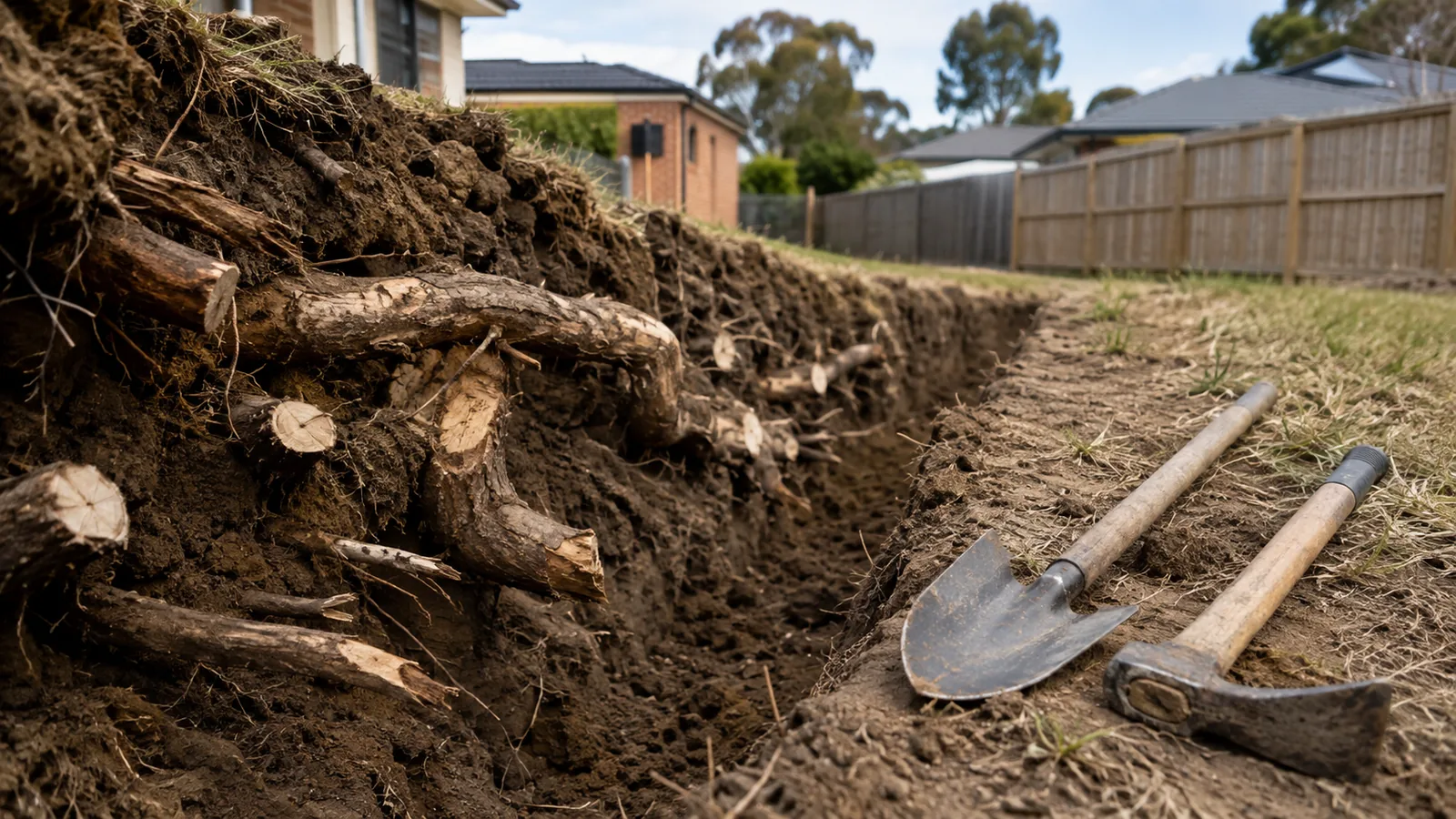
A nearby tree or hedge may have roots through the same garden bed. This is particularly relevant along boundaries, where plants from either side can extend into the area being investigated. Note what is being kept and show it on the sketch. The fact that the old stump is closest to a shoot does not prove it is the source.
Avoid cutting a line of roots or treating shoots until uncertain connections have been considered. Ask an arborist or suitable horticultural adviser to identify the plant and assess the implications for retained vegetation. If access or investigation involves the neighbouring garden, arrange that conversation before booking invasive work. Keep the question focused on plant identity and connections rather than assuming ownership from where a shoot emerges.
Make an observation record that helps diagnosis
Choose a few permanent reference points such as a gate post, path corner or tap. Sketch where each cluster appears relative to them, and give clusters simple labels. Photograph from the same direction each time. Record whether the shoots are new, returning at a previously cut point or spreading to different locations.
Add relevant garden changes to the record. These might include digging, laying a path, moving irrigation, disturbing a bed or bringing in soil. Note when the original tree came down and when grinding occurred if you know. A useful record can be brief; consistency matters more than frequent measurements. Avoid disturbing the plants solely to produce more data, and keep children or pets away from any exposed or damaged ground.
Keep the original leaf photographs at full resolution. A compressed screenshot inside a message may lose the details an adviser needs, especially the leaf arrangement along the stem. Include the whole shoot, a leaf seen from above and any safely visible connection at ground level. If several clusters have different leaves, label them separately rather than combining them into one photograph called regrowth. That gives an adviser a better chance of identifying more than one plant without needing another round of messages.
Distinguish observation from a treatment plan
A homeowner can document the leaves and locations without deciding how to kill or remove the growth. Those are separate tasks. The response may involve ordinary garden maintenance, a review of remaining stump tissue, specialist root assessment or a longer management plan. Which is appropriate depends on the identified plant and its setting.
Do not copy a chemical recipe from a forum or assume a product labelled for one purpose suits this plant and situation. Product choice and use need current label guidance and competent advice. Likewise, repeatedly grinding the centre is not an automatic solution to shoots arising elsewhere. Ask what evidence connects the proposed treatment to the observed source, and what follow-up would show whether the approach is working.
Hypothetical example: shoots along a garden boundary
A homeowner notices several shoots after a stump was ground near a fence. One is at the old centre, while others appear further along the boundary. They initially plan to hire a machine and grind the entire strip. Before doing so, they photograph the leaves, mark the clusters and include a living hedge in the neighbouring garden on their sketch.
An adviser can now consider whether all the growth belongs to the same plant and whether roots from retained vegetation are involved. The homeowner asks the original contractor to review the central point against the completed scope. The distant clusters are treated as a separate identification question. This avoids turning a small follow-up into an uncontrolled trench along the fence and gives each part of the issue a clearer next step.
Avoid mowing away all the evidence
Regular mowing may remove shoots before you photograph them, leaving only a recurring impression that something keeps coming back. If it is safe to do so, capture a few clear photographs before routine maintenance, without leaving a trip hazard or changing how the area is used. Record which patch was cut and whether growth returns there.
Do not deliberately allow an unidentified plant to grow large just to improve identification. Ask an adviser what photographs or samples they need. Where young shoots are in a walkway or children's play area, keep the immediate area safe while arranging that advice. The aim is to preserve useful information, not to turn observation into a reason for ignoring an everyday garden hazard.
Decide whether the next project should wait
If you intend to turf, plant or pave the area, tell the next contractor that regrowth remains unresolved. Covering the patch may hide evidence and make later access harder. That does not mean every garden project must stop indefinitely. It means the person doing the next work needs to understand the uncertainty before building their preparation around it.
For a replacement tree, identification may influence species or position choices. For a fence, root connections may matter at proposed post locations. For a lawn, the maintenance plan may need to account for recurring growth. Ask the relevant adviser what needs resolving before that particular project, rather than demanding a blanket promise that nothing green will ever appear in the garden again.
Measure progress by the original problem
Agree what follow-up will be useful after any advised work. It might involve photographs of the same marked clusters, a check of the central stump area or a review before new planting. Keep records of what was actually done, including the location and method, so later observations are interpretable.
A quiet patch at one inspection is useful information, but it is not proof that every connected root has ceased growing. Conversely, a single new seedling may have nothing to do with the earlier stump. Compare like with like: plant identity, location and timing. This is why a simple map and repeat photographs often help more than counting every green shoot without knowing what it is.
Send a follow-up request with a clear question
Give the contractor the original job reference if available, the date you first saw growth and the labelled photographs. State whether the growth is at the stump centre or elsewhere, and whether nearby trees or hedges are staying. Ask for identification or inspection of the specific issue before requesting a particular machine or treatment.
For a Pakenham garden, include access changes since the original visit, such as a new fence, shed or lawn. These may affect how a follow-up can be assessed. Keep the request focused: what is growing, where it is attached if visible, and what you want to do with the area next. That provides a basis for useful advice without assuming that every shoot has the same cause or remedy.