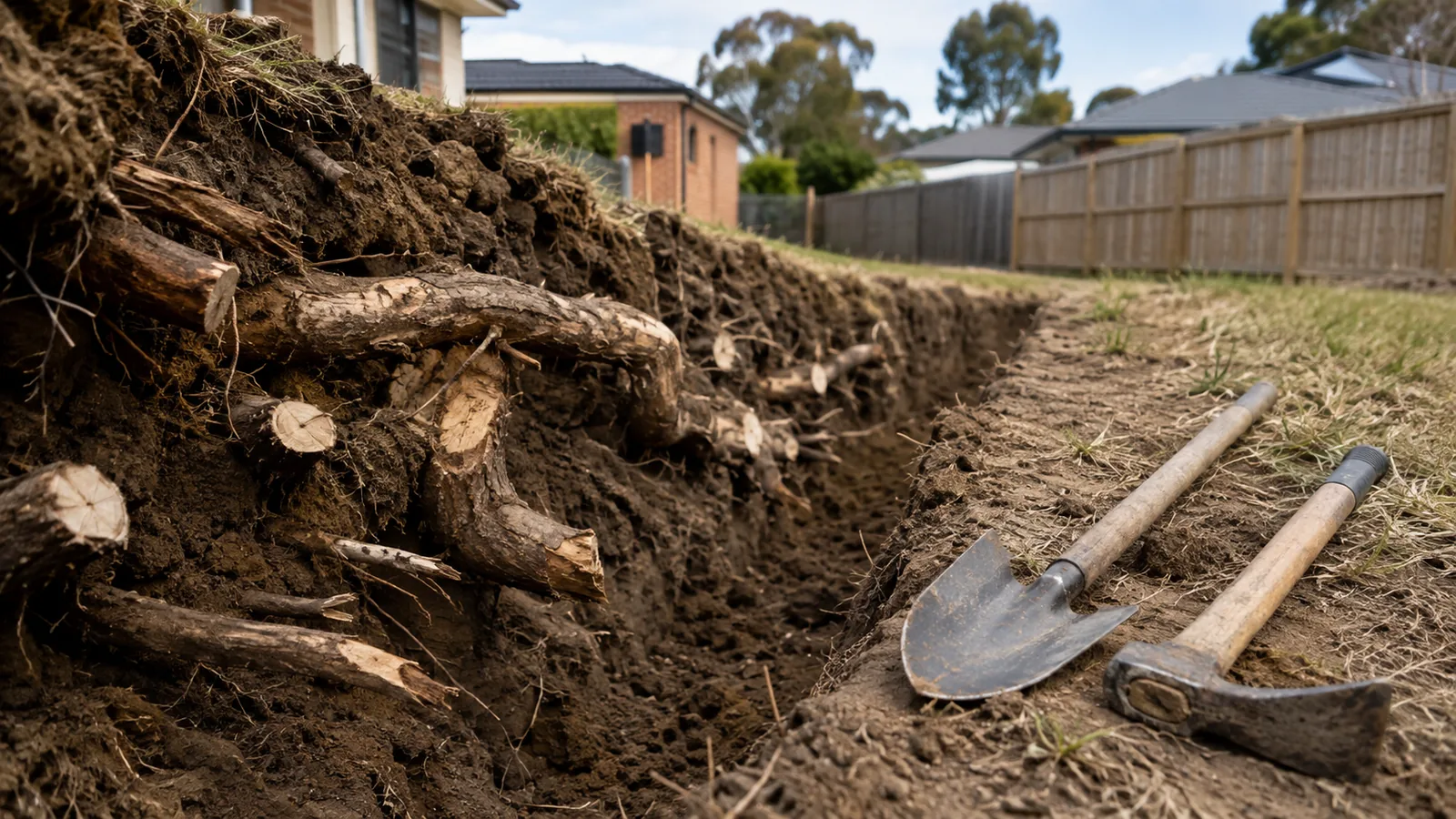
Start with the new fence, not the old stump
The useful question is whether timber will obstruct the new fence installation. A stump can sit directly beneath a proposed post, between two posts, or outside the fence line while a large root crosses it. These are different jobs. Ask the fencer to mark the intended line and post locations before the grinding contractor decides what to remove. Use visible marks that will survive the old panels coming down, and photograph the marks relative to permanent features.
Tell both contractors whether the fence height, alignment or gate arrangement is changing. A wider gate can move a post into ground that nobody examined during the first visit. Likewise, straightening an old crooked fence may bring the new footing line across previously hidden roots. A small drawing with the old stump and proposed posts is often more useful than several close photographs of the cut trunk.
Decide what must remain supported
Look at what the fence is doing besides dividing two gardens. Soil may be piled against its bottom boards, a separate retaining wall may run below it, or old posts may also support a pergola or gate. Do not treat these as ordinary removable panels. Point out changes in ground level and anything attached to the fence so the appropriate contractor can establish the sequence.
Grinding and excavation change the material around a stump. Where roots pass beneath retaining structures, the issue is not simply protecting the visible face from marks. Disturbance can affect support, and the structure may conceal drainage or services. Have the relevant building or retaining-wall professional assess that relationship. If movement or cracking is already visible, photograph it before work and explain when it was first noticed.
Pay particular attention to the bottom of the fence where soil levels differ. Photograph both sides where access is agreed, because a panel viewed only from your garden may conceal a retaining board or drain on the other side. Note whether soil has recently been added against the boundary. Give those photographs to the fencer before they finalise the demolition sequence, so the access opening does not accidentally remove something that was holding material in place.
Map the wood that conflicts with the posts
A cut trunk is a useful landmark but a poor map of the underground job. Broad buttress roots may flare well beyond it. Old timber can also remain below a post location where the surface looks clear. Ask the fencer which locations need preparation and the stump contractor which of those locations their method can reach. Put unresolved areas on the drawing instead of assuming they are covered by the word removal.
Avoid specifying a generic grinding depth and expecting it to solve every footing. The fencer's required excavation, surrounding ground and chosen installation method determine the requirement. In some cases, removing the central stump is enough to allow later preparation. In others, a particular lateral root or buried root plate needs separate attention. Obtain agreement on the actual post locations rather than paying for unnecessary work across the whole garden.
Use the open fence as a planned access window
When a fence is being replaced, the period with panels removed can offer a simpler approach to the stump. It can also leave pets unsecured and neighbouring gardens open to each other. Coordinate the access window instead of having one contractor remove panels and hoping the next can arrive promptly. Confirm who provides temporary barriers, when they are put in place and who checks them before leaving.
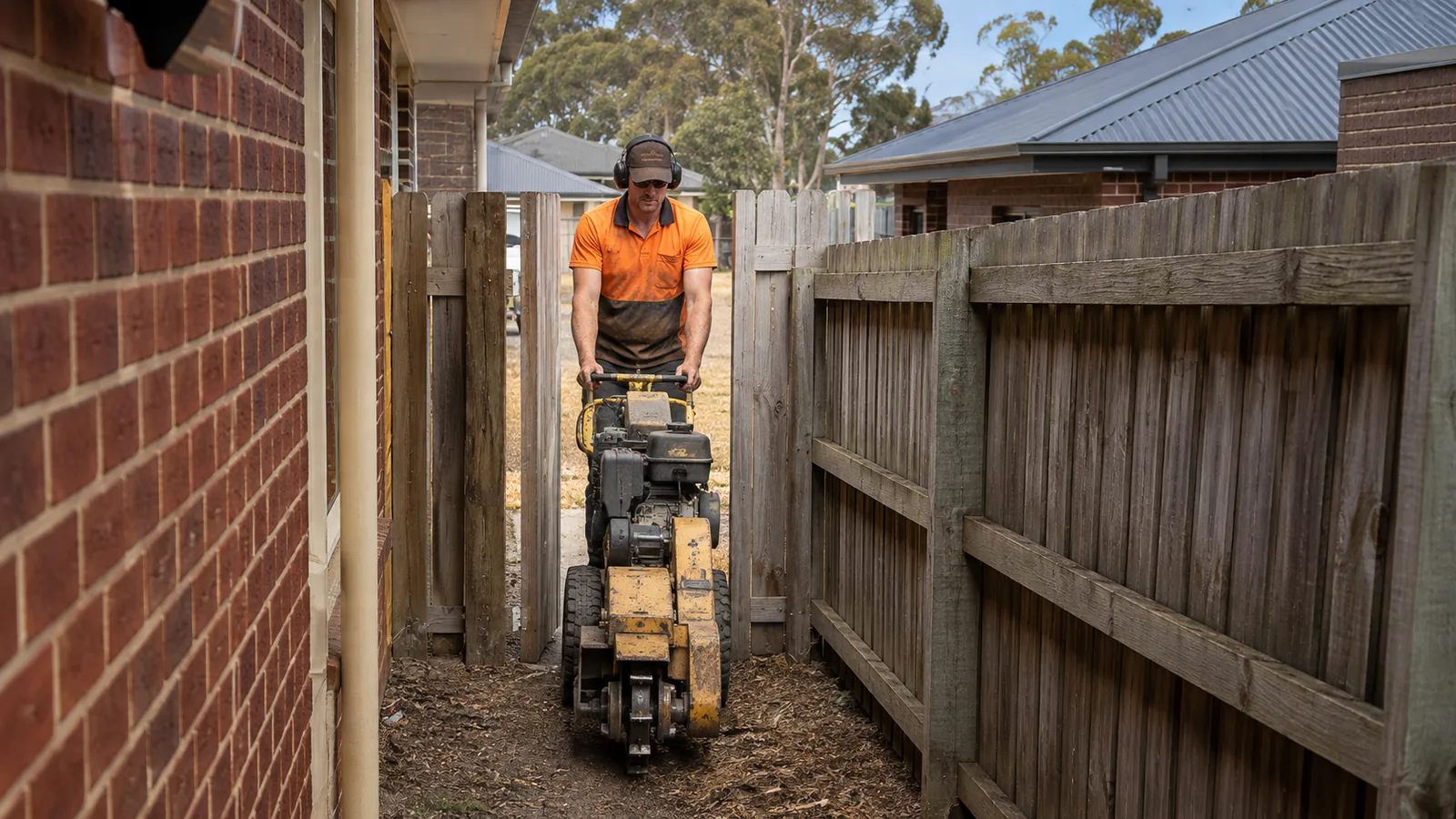
On a compact Pakenham or Officer block, a route through an adjoining garden might avoid a narrow side passage, but it is not automatically available. Obtain agreement before quoting that route as an option. Discuss gates, garden beds, surface protection and the path back out. If access depends on removing a neighbour's possessions or using their driveway, arrange it explicitly and allow for their ordinary use of the property.
Keep retained trees in the conversation
The stump being removed may not be the source of every root at the fence. An established tree on either side can have roots through the same area. Do not assume exposed wood belongs to the cut tree simply because it appears near the stump. Ask an arborist to assess uncertain roots connected to trees that are being retained before the scope includes cutting them.
This matters when a contractor suggests clearing a continuous trench for the whole fence. A trench may be convenient for construction but can intersect more roots than separate footing locations. Discuss whether the design or post spacing can avoid sensitive areas. The decision belongs with the fencer and appropriate tree adviser, with the boundary arrangement considered as well. A grinding contractor should not be asked to make a structural tree decision from a marked paint line alone.
Plan the handover between contractors
Write down what the grinding contractor will leave for the fencer to inspect. Useful descriptions identify stump references, cleared locations, spoil arrangements and areas deliberately left untouched. Agree whether loose grindings will be removed from the proposed footing positions or collected elsewhere. A surface that looks tidy after raking can still conceal timber, so the handover should describe the work rather than rely on appearance.
Ask the fencer when inspection is needed. They may prefer to attend while the relevant areas remain visible, or to receive photographs before taking over ground preparation. Either way, leave enough time to resolve a missed root without holding up the entire installation. Do not backfill or cover every location solely to make the garden look finished if that prevents the next contractor checking the conditions they need.
Watch for old posts, concrete and wire
Fence-line stumps often share space with remnants of previous fencing. The homeowner may remember a timber fence, while the ground contains an older concrete footing, wire or a buried post support. Show the contractor anything already visible and mention previous fence repairs. Do not cut into the stump yourself to search for embedded material, and do not pull on buried wire whose route is unknown.
Keep service investigation separate from identifying fence debris. Before You Dig Australia provides planning resources for work around underground infrastructure, but a fence contractor's old sketch is not a substitute for checking the actual site. Private garden services may need additional investigation. If something unexpected appears, stop work in that location and identify it. Treat an unknown pipe or cable as an unresolved service, not as redundant rubbish.
Hypothetical example: a new gate changes the job
A homeowner plans to replace a fence and add a wider side gate. The old stump is between existing posts, so the first idea is to grind its top and leave the roots. Once the fencer marks the new gate, a proposed hinge post lands across a broad root flare. The useful change is to add that specific footing location to the preparation brief before agreeing the work.
The homeowner arranges temporary pet containment and a period when the old panel can be removed for access. The stump contractor identifies which timber can be removed within the agreed scope. The fencer checks the hinge-post location before covering it and decides on the footing preparation. Nobody assumes that a deeper grind everywhere is necessary. The finished sequence follows the actual gate layout and gives each trade a clear point at which to inspect its part.
Avoid the mistakes that cause a second visit
One common mistake is installing the new fence first because its booking date arrived earlier. That can remove the easiest machine access and place new materials close to the stump work. The remedy is to discuss sequencing while both bookings are provisional. If the fence must go first, confirm that the remaining route and working space are acceptable before proceeding.
Another mistake is asking for every root to be removed without defining why. That request may enlarge disturbance unnecessarily and involve retained trees. Mark the locations that conflict with the project and ask for a targeted assessment. A third mistake is treating all spoil as suitable material beneath new posts. The installer needs to specify the preparation for their footing. Keep loose woodchips out of that decision until their suitability has actually been assessed.
Check the finished boundary before closing the job
Walk the accessible area with the contractor after machinery has stopped and it is safe to enter. Compare the completed locations against the marked plan. Check that any exclusions are recorded, that spoil is where agreed, and that the boundary is secure for children or animals. Keep photos of remaining roots or timber so a later question can be discussed against a clear record.
Look beyond the stump patch. Gates should have the agreed access restored, temporary panels should be stable, and paths should be free of loose obstructions. Tell the fencer about any ground disturbance along the route as well as at the post locations. A handover is more useful when it records what changed and what still needs assessment, rather than simply stating that grinding has finished.
Send a brief that both trades can use
For a fence job in Pakenham, Beaconsfield or the surrounding area, include your suburb, the old stump's location and a wide photograph showing the fence and nearby structures. Add the proposed post layout, the preferred access route and the intended order of work. If a retaining wall, shared access arrangement or retained tree is involved, make that a separate line so it cannot disappear inside general notes.
Finish with the practical responsibility questions: who removes the panel, who arranges temporary security, who clears spoil and who accepts the footing locations before the fence goes in. You do not need to choose the machinery or design the foundation yourself. You need a common description of the problem and an agreed point for each contractor to inspect it. That makes quotes easier to compare and reduces misunderstandings on the day.