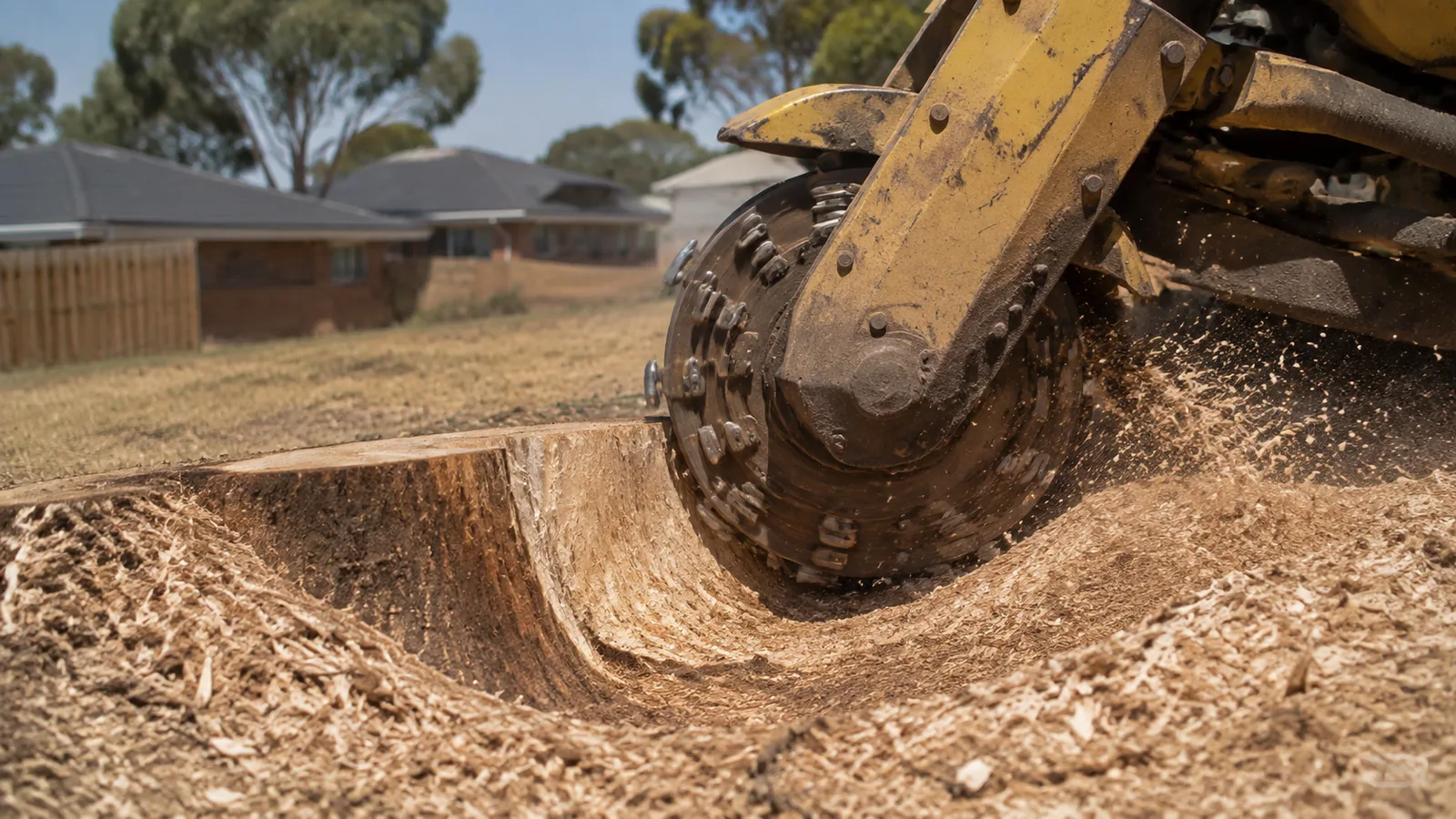
Define what a completed job means to you
Write down the result you need before choosing who operates the machine. Removing a trip obstruction from an unused garden corner is different from preparing a defined area for planting or a contractor's footing excavation. If the next use has specific requirements, obtain those first. Otherwise it is easy to compare two offers that leave very different conditions behind.
Describe the stumps and relevant roots separately. Count them, mark their positions and show their relationship to paths, fences and structures. Do not assume all visible wood needs the same treatment. A professional quote or hire discussion becomes more useful when it starts with the required outcome, because machinery is only one part of completing the garden project.
Ask about the actual hire machine
A general listing for a stump grinder does not establish that the equipment suits your site. Ask which model is available, what information the supplier needs to assess suitability and what training comes with it. Show the route, stump and surrounding objects before reserving the equipment. A small machine can still be unsuitable for a particular slope, obstruction or working position.
Do not choose by engine size alone or assume that every machine of similar appearance has the same controls. Vermeer's rental guidance requires understanding the machine's operation and safety information, including its operator manual. Use the supplier's handover to resolve uncertainty about the actual unit. If you cannot understand or safely perform what is required, choose a different arrangement rather than learning through trial and error at home.
Include transport in the decision
Getting the machine from the supplier to the property is a separate planning task. Ask whether delivery is available or what transport arrangement is required. If collection is proposed, confirm the suitability of the vehicle, trailer, loading method and securing arrangements with the relevant supplier instructions. Do not guess towing or load limits from how compact the machine looks.
Then identify a suitable unloading point at the property. A sloping driveway, parked vehicles or a narrow street can change what is practical. Explain these conditions in advance. Include the return journey and cleaning expectations in your comparison, rather than assuming the hire finishes when cutting stops. Delivery may simplify one part of the job, but it does not resolve garden access or safe operation.
Evaluate your available time honestly
The hire period may include collection, instruction, travel, setup, work, cleanup and return. Those tasks compete for the same time, especially when the supplier has a fixed closing time. Ask how late returns, weather interruptions and equipment faults are handled under the current hire agreement. Read the actual terms rather than relying on another person's experience with a different branch.
Consider whether time pressure would tempt you to keep working after a problem appears. A buried obstruction or an unfamiliar control should prompt a stop and a call to the supplier, not a rushed attempt to finish before return time. If your only available window is tightly constrained, compare that with having a contractor assess and complete a clearly defined scope.
Break your available time into real tasks on paper. Add the supplier's travel distance, collection appointment, instruction period, unloading, site preparation and return deadline before allocating time for cutting. Include another person's availability if they are needed for transport arrangements or household supervision. If the remaining work window looks tight before any unexpected obstruction is allowed for, ask about a different booking arrangement. A realistic schedule can reveal that the limiting factor is logistics, even when the stump and machine appear well matched.
Check access without assuming smaller is always easier
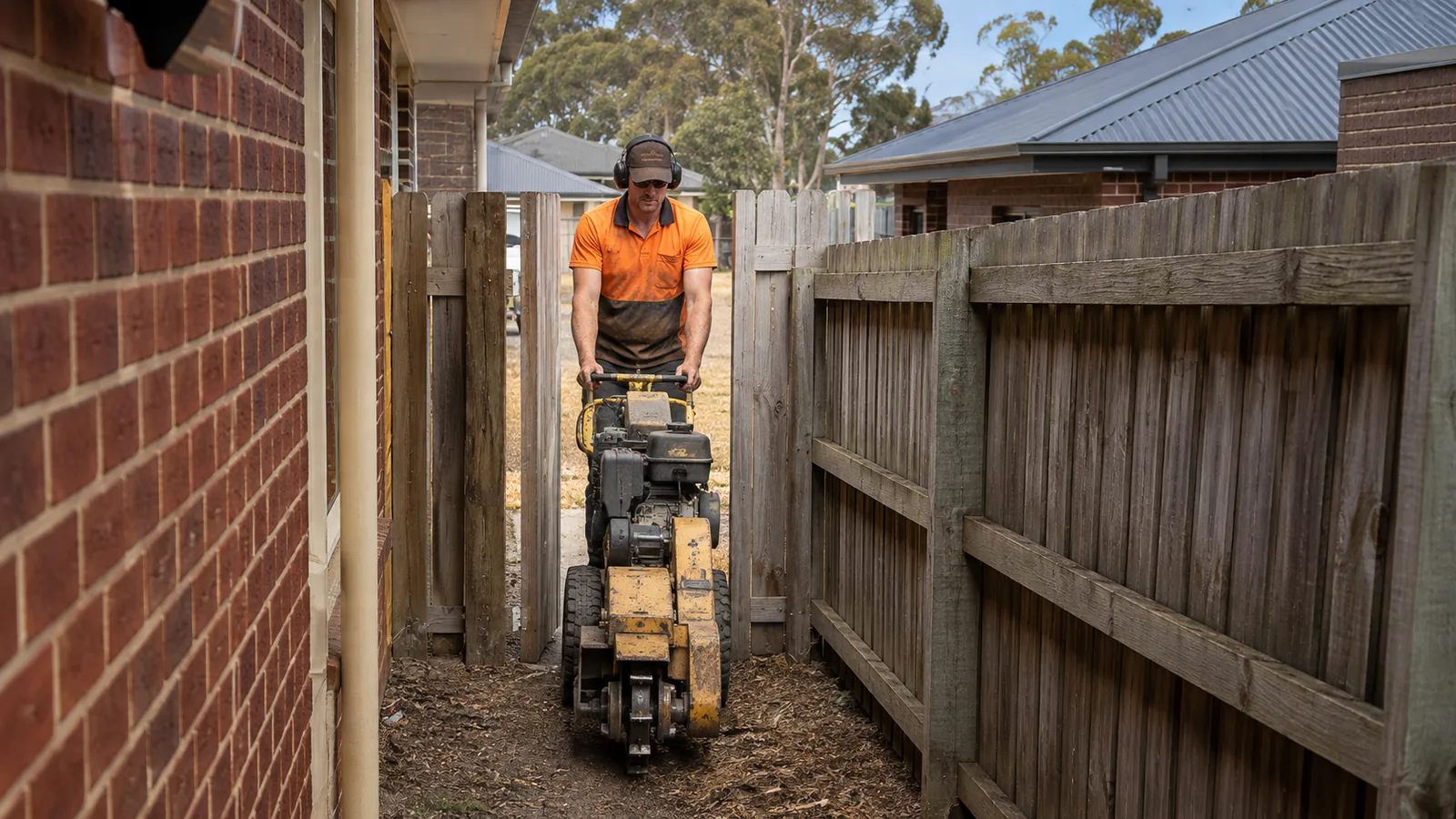
Measure the narrowest points and photograph turns, steps and changes in surface. A machine that fits through the gate still needs room to reach and work around the stump. Include the position where the operator would stand and the route back out. Ask the supplier or contractor to assess the whole journey rather than accepting a single gate measurement as proof.
On a compact Pakenham or Officer property, stored bins, taps, air-conditioning units and fence returns can create the real constraint. Moving a few possessions may help, while removing a structural obstacle requires a different discussion. If the only imagined route involves lifting machinery over a wall or improvising a ramp, stop and ask for an appropriate assessment before making a booking.
Resolve buried obstacles before cutting
Old fence wire, concrete, rubble and services can share the stump area. Tell the supplier or contractor what you know about previous landscaping, fences and garden irrigation. Include visible obstructions in photographs. Do not use machinery to discover whether an unknown buried object is harmless, and do not assume a disused-looking pipe or cable is safe to disturb.
Before You Dig Australia provides resources for planning work around underground infrastructure. Use that planning process and arrange any additional private-service investigation needed for the site. The hire decision does not remove these questions; it changes who must organise and understand them. Ask the contractor how unexpected discoveries are handled, or the supplier what to do if cutting cannot safely proceed.
Plan control of the work area
Children, pets, neighbours and visitors need to be kept out of the work area according to the equipment instructions and the operator's plan. Think about the household's ordinary movements: a rear door, shared gate, delivery access or the dog's only route outside. Arrange alternatives before work begins. A person arriving unexpectedly should not need to pass the operating machine.
Ask what guarding, protective equipment and work-area controls the actual machine requires. A video showing someone grinding without adequate protection is not evidence of acceptable practice. Do not remove or bypass guards to reach an awkward part of a stump. If the setup cannot keep people safely separated from the work, the right response is to change the plan or use a competent contractor.
Compare current offers on equal terms
Put the hire offer and contractor quote side by side using the same intended outcome. Include equipment or operator, transport, preparation, material handling and the condition left afterwards. Use current written figures from the actual suppliers; generic online prices may describe different equipment or omit parts of the job. Do not treat your own time as zero simply because you are doing it on a weekend.
Check what each offer excludes. A contractor may quote grinding without carting away spoil, while a hire price may exclude delivery or other charges described in its terms. Ask how damage, breakdowns and unexpected obstructions are dealt with. The purpose is not to prove one method always costs less, but to understand what you are accepting with each arrangement.
Hypothetical example: one stump and a short weekend
A homeowner wants a stump removed before planting and sees a weekend hire offer. The stump looks modest, so hiring initially seems straightforward. After listing the whole job, they still need equipment delivery, model-specific instruction, service information, spoil handling and suitable planting preparation. The garden route also includes a turn beside a raised bed.
They ask the supplier to assess the route and obtain a contractor quote for the same finished scope. The decision then rests on actual suitability, responsibilities and time rather than the advertised hire period alone. Either arrangement could be considered if its requirements are met. The useful outcome is a comparison that includes the planting preparation and leaves no essential task hidden between bookings.
Know which warning signs change the decision
Unresolved services, uncertain roots from retained trees, buried construction material or a stump beside a retaining structure call for assessment before machinery choice. They are not problems that become simple because a rental machine is available. Likewise, slopes and soft ground need checking against the intended equipment and current conditions.
Lack of confidence with the machine is itself a reason to pause. Ask the supplier questions before collection and during handover. If the job's suitability remains unclear, get a site assessment or choose a contractor who can explain the proposed method. Do not continue solely because a deposit has been paid or equipment has reached the driveway. A booking commitment does not make an unsafe or unsuitable setup workable.
Avoid leaving cleanup as an afterthought
Decide where grindings will go and who will handle them before the machine arrives. Moving material can take effort and require access different from the cutting operation. Agree whether the site will be left with a pile, a raked patch or a separately prepared surface. Keep the material away from drains and ordinary walking routes.
If you are hiring, arrange the tools and suitable destination for the material as part of the plan. If you are booking a contractor, read the finishing description carefully. Do not assume stump removal includes clean soil, planting, lawn repair or disposal. Those may be separate tasks, and comparing them clearly helps avoid a seemingly completed job becoming another weekend of work.
Choose the arrangement you can complete safely
Before deciding, ask yourself whether the equipment is suitable, whether you understand its requirements and whether every stage has an owner. That includes preparation before use and making the garden usable afterwards. A straightforward site may still demand proper training and planning; a complicated site may benefit from specialist assessment before any quote is finalised.
Save a brief containing the stump photographs, access information, intended next use and unresolved questions. Take the same brief to the hire supplier and contractor so their advice addresses the same job. You can then choose on evidence about this garden and these responsibilities. The practical measure of value is completing the agreed work safely and leaving the ground in the condition your next project needs.